For some people there comes a time in later life where they become less able to manage living independently and need some form of support and care to help them maintain a suitable quality of life. The world of elderly care is notoriously expensive and can be difficult to get right, as of course we are all individuals who require different services and will have varying preferences.
At Yoopies we’re committed to providing care and helping as many people as possible in their home lives, but we recognise that certain solutions may work better for some than others. That’s why we’ve researched all the advantages and disadvantages of our elderly care services, alongside formal care and nursing homes to help our users decide which type of care will suit them best.
Contents:
- What does a home care assistant do?
- Advantages and disadvantages of home care assistants
- What is a nursing or care home?
- Advantages and disadvantages of care homes

What does a home care assistant do?
A home care assistant can be a great solution to provide the necessary care and support those who are no longer able to maintain a high quality of life independently. Depending on the needs of the individual, a home care assistant can be of help in a wide variety of different ways including helping with house work and daily chores, helping with medical care, helping maintain personal hygiene, providing companionship, working as a respite carer for other family members and more. To research more into what a home care assistant can do, check out our guide to home care assistants here!
Advantages and Disadvantages of home care assistants
Like with any form of care, what suits one person might not be best for another, therefore it is important to research which solution works best for you. We’ve gathered together the advantages and disadvantages of the available care solutions in order to help you make an informed decision.
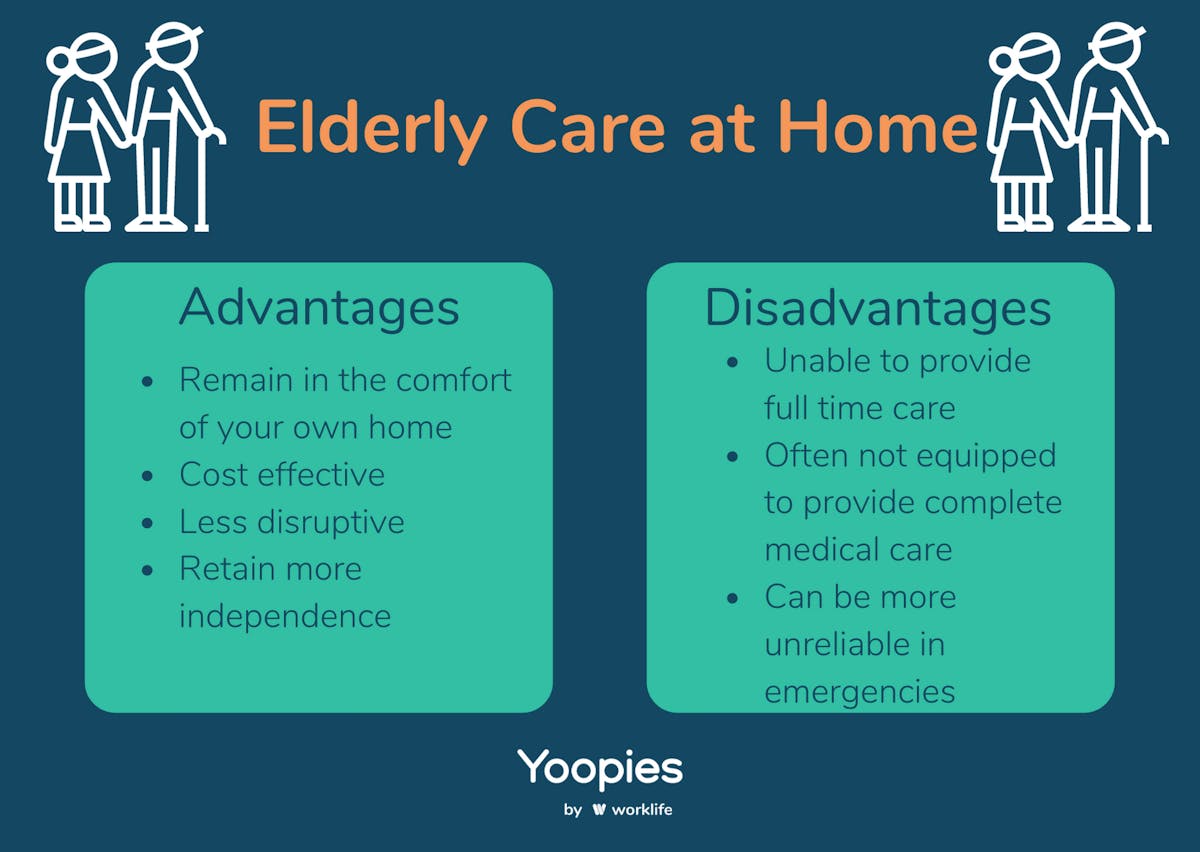
Advantages:
- Cost effective: Compared to other solutions such as care homes, hiring a home care assistant can be a more cost effective way of receiving care. The average cost per hour of a home care assistant in the UK ranges from £10-£15, however this may vary depending on your individual needs and where you live. As you only need to pay for the hours of care you directly receive however, this solution is far cheaper than round the clock care options like care homes.
- Less disruptive change: Accepting and adjusting to having a professional care workers support your daily life can be difficult for many people. Hiring a home care assistant to come to your house can help people adjust to this change more easily as they are able to fit the support in around their usual routine rather than having to face a significant lifestyle change, which can be distressing for some.
- Retain your independence: As you are still living in your own home, you are in control of what schedule you stick to and how the home care assistant fits into your life. For many people, being in control of their decisions and schedule is the most important aspect of their life, so for those who would like to retain their independence, home care assistants are far superior to moving into a nursing home.
Disadvantages:
- Less complete form of care: For those who need a significant amount of care, it might not be possible to find a home care assistant who is able to provide care at all times of the day and night, unlike in a care home. If you do require a significant amount of care, this could become more expensive if you have to hire multiple individuals to cover the various shifts.
- Might be unable to provide specific medical care: If you have a specific medical condition or require specialised equipment then a care home facility may be better suited to you. Whilst some people may still prefer to remain in their own home, it can become expensive to install all the necessary fittings and equipment to accommodate for certain disabilities at home.
- Can be less reliable in emergencies: As home care assistants are usually only hired for specific hours, they will often not be able to help you in certain emergencies. The benefit of a care home compared to staying in your own home and hiring home care assistants is that you can be sure to have access to care at all times of the day and night, no matter the situation.
What is a Care Home or Nursing Home?
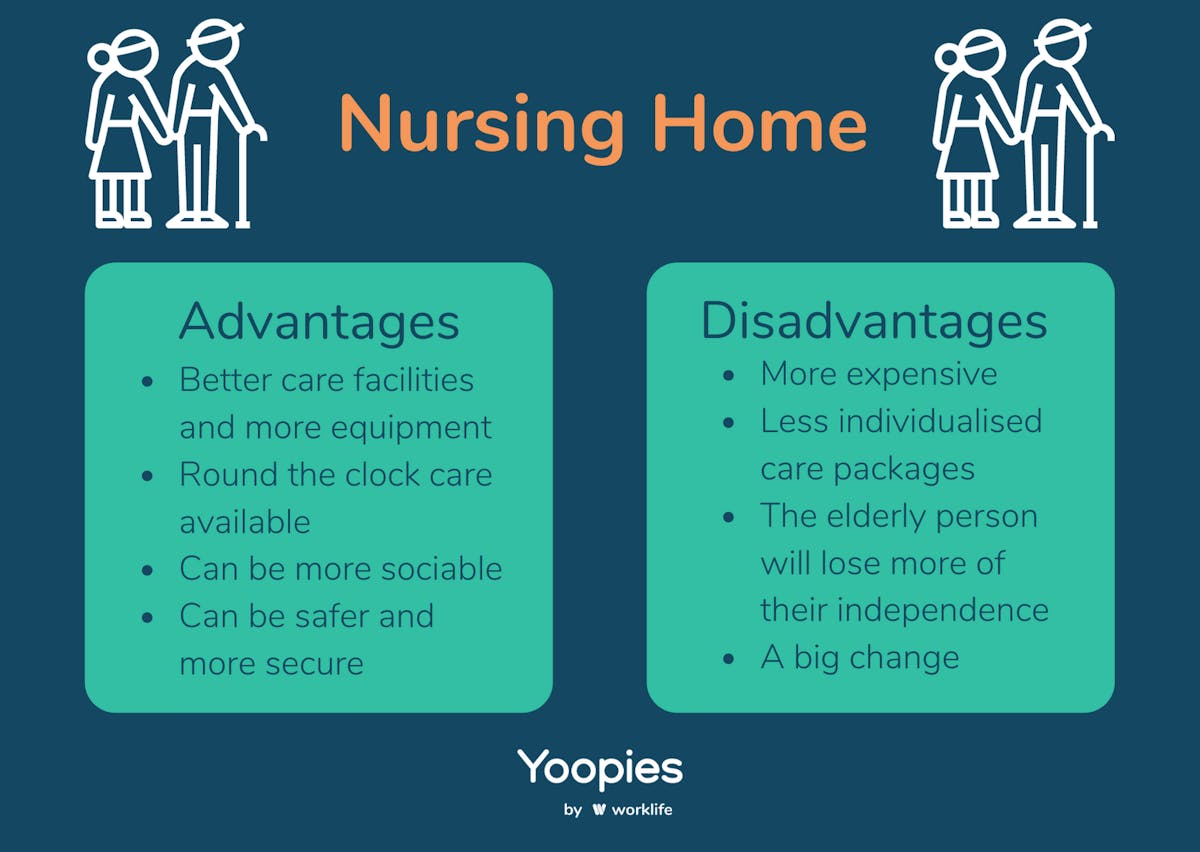
A care home or a nursing home is a residential facility that allows elderly and disabled residents to live under the support and supervision of trained medical professionals, once they are no longer able to live independently or maintain a satisfactory standard of living. They are very common across the UK and can be the perfect solution for many older people, however they also have their drawbacks so it is best to do your research on the advantages and disadvantages of care homes.
Advantages and Disadvantages of Care Homes
Advantages:
- Fully equipped care facilities: A care home is a specifically designed facility for looking after elderly people, therefore they are best prepared to look after the residents and all their individual care needs. For those with particularly complex or difficult medical issues or long term illnesses, a care home can be a great place to receive the substantial amount of support required by the elderly person.
- Round the clock care: Not only are care homes fully equipped, but because they are residential, the care home residents are able to benefit from 24 hour supervision. Unlike home care assistants that you hire to come to your house, care homes will have workers who are on duty at all hours of the day, which can be a real comfort to some residents.
- Sociable: As people get older, it is easy to become isolated and less active, which can lead to loneliness in many people. Care homes offer social activities and regular opportunities for residents to get together and socialise. Family and friends are also free to visit should they wish in a safe and easy to manage environment which can take the stress out of spending time with those you love and ensure you are able to spend quality time together rather than worrying about logistical problems.
- Safe and Secure: Residential care homes can provide the security and safety that many older people require to be confident in older life. For those with physical disabilities and medical conditions too, supervised living can be the safest solution.
Disadvantages:
- More expensive: It is no secret that care homes do not come cheap, any for many people the round the clock care facilities are just not affordable. There may be government grants and funding for those who are unable to afford their own care, so check out the NHS website to see if you are eligible.
- Less individualised care: Naturally as there are lots of residents at a care home, the level of care may be less individualised than if you were to hire a personal home care assistant.
- Loss of independence: As you will be joining a care home which houses many other residents, there will be a schedule and timetable to adhere to, meaning that the resident may feel like they have lost their independence. For some residents, this may not be an issue however others may prefer to retain their independence and receive care at home on their own schedule.
- A significant change in lifestyle: Alongside losing your independence, your usual lifestyle will likely change significantly when you move into a care home. From scheduled meal times to spending a lot of time around new people including other residents and carers, moving into a care home may be a huge adjustment for some people and you should take into considerable whether you are prepared for these changes before deciding to move into a residential facility.